|
I. Scientific/Technical/Management Section
The new US mission to a nearby asteroid to extract a boulder from it and return it to a lunar orbit Asteroid Redirect Mission ARM-UP is the first steppingstone to Mars and will be completed prior to the Mars manned mission. Launching to Mars will most likely take place from Lunar orbit using Lunar gravity to propel the spaceship.
With Mars being some 34 million miles at its closest it would be a demanding physical experience for the selected astronauts. I think that the mission would require at least 5 spaceships rather than 1 because of the complexity of the mission. As you remember Columbus would not leave Spain with less than 3 ships, 1.) The ship designed for the crew. 2.) A repair ship with spare parts. 3.) Fuel-tanker ship for the Mars lander. 4.) The Mars lander ship with its own cargo bay including the stores: the dwelling material for 500 days, food, water, oxygen generators, Mars rover, and ground radar. 5.) A GPS control ship with required satellites and controlling equipment. Since it would take 2+ Earth years and 500 Mars days to travel back and forth to Earth it would truly be a test of endurance on the part of the crew but in comparison to other historical explorers who were gone for similar periods it would not be a much longer time record, example Magellan 3 years to circumnavigate the Earth and Lewis and Clark 2 years and 4 months. The return to Earth mission would be longer because Mars’s orbit would change while the 500 day exploration took place so the return trip would be over 34 million miles, so 500 days after Perigee, unless they decide to wait a full Martian year about 1.9 Earth years for another 34 million mile return. The ships names respectively should be the Enterprise, Atlantis, Endeavor, Columbia and Challenger.
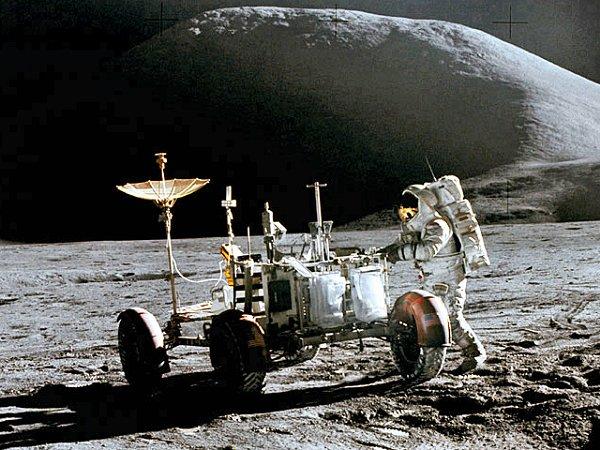
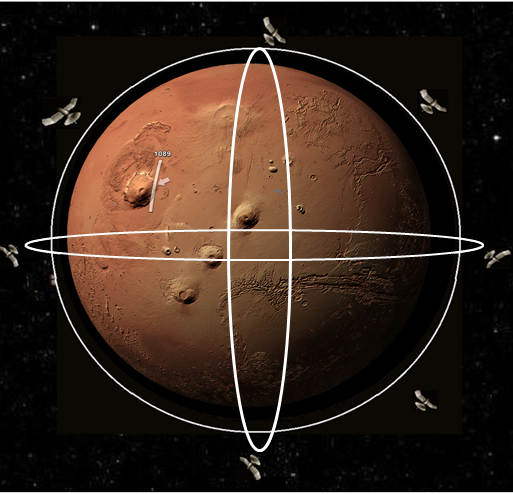
The mission to Mars in the near future would be a historical milestone in technology perfection. The Perigee period is a very import timing on the arrival to the planet, in the Martian calendar https://www.aerospacesandt.com/Mars%20new.html this is the shortest distance to Mars. Separate calendars for other planets are important since they all have orbital differences and would be much different than that of Earth, as an example orphan planets with no Suns would require special calculations. Mars compared to Earth would have some 23 months in its orbit around our Sun. Some of the Universes orphan planets may be the result of black holes devouring their Sun or being dislodged from orbit by a planetary imbalance of another planet. These planets would drift through the Universe until gravity from another Sun would take them into new orbits. Selection of the landing site would very important and NASA should consider the Coriolis wind forces of the planet picking an area that would block high winds, and not be avalanche prone. Since Mars had considerable volcanic activity there may be areas where the H2O of the planet may have been covered up with volcanic ash so there may be underground rivers that are not apparent from surface photography. So, landing near one of the canals may be beneficial since they may be explored with ground radar for water. For safety purposes the ability to use GPS for navigation on the Martian surface would allow astronauts to travel over the Martian surface with GPS receivers attached to their Mars rovers. Two sets of GPS systems would be deployed during the first mars mission with satellites on both sides of the planet allowing for navigation on both the dark and lighted sides of the planet. The satellites would transmit with multi functional data utilizing both Earth and Mars positions so both astronauts and people on the Earth’s surface would be able to use the data, although the data bases would be different. See Mars GPS https://www.aerospacesandt.com/MarsGPS.htm. Astronauts using this system would be able to locate their landers and flight equipment and navigate around hazardous sites. The GPS could also improve safety locating rovers that may break down or become disabled in the rough Martian terrain. Data could be incorporated into the Mars GPS system with present Martian photography. Rendezvous of multiple rovers could be achieved after separate mission events. Below, the Apollo rover was navigated by visual reference and relied on Astronaut’s judgment, pre-planning and signals from Earth. With precision GPS the Astronaut will have a tool to enhance and bring safety and confidence to his Martian visit.
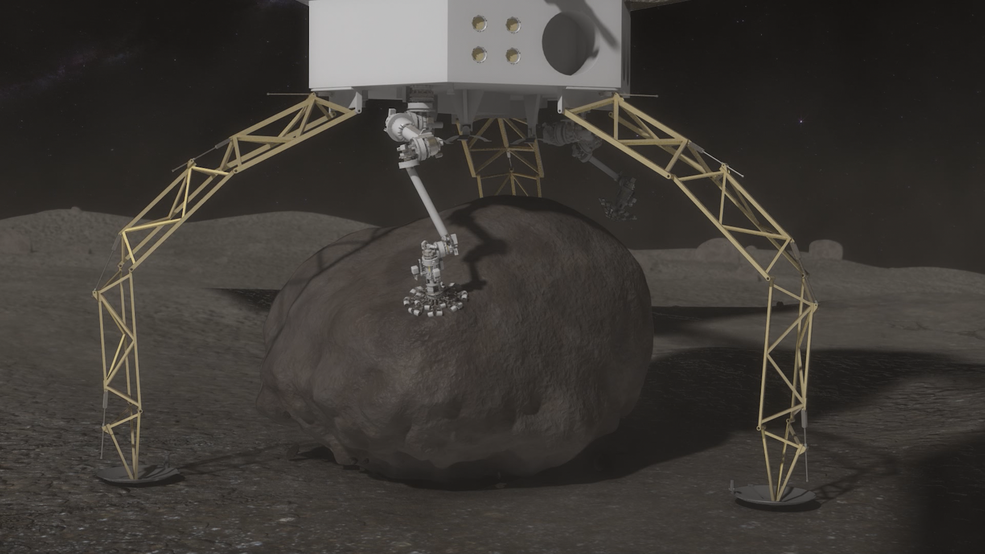
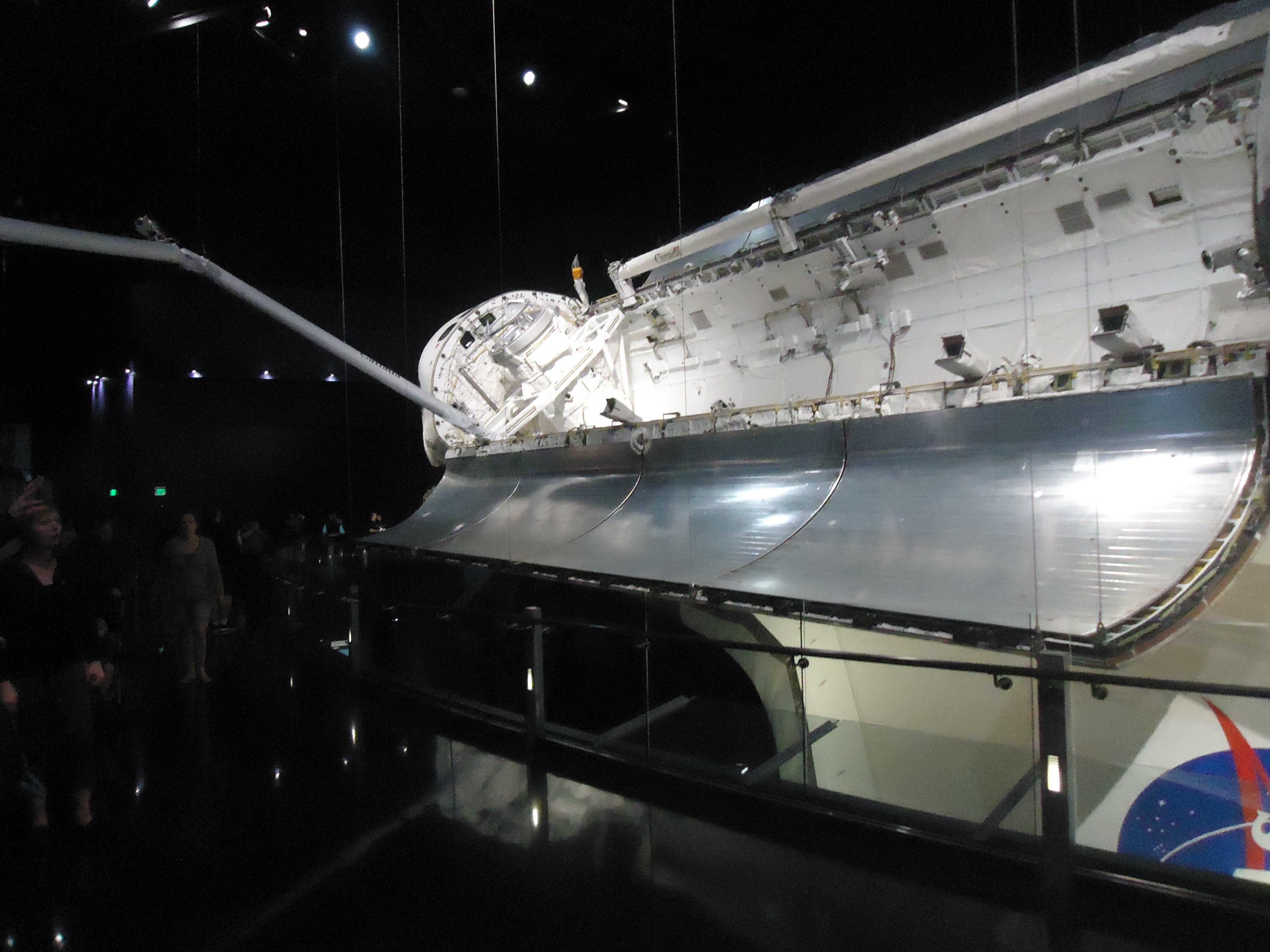
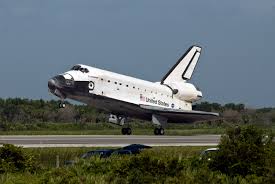
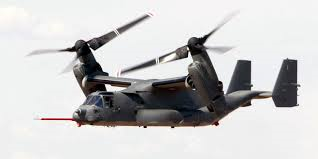
Apollo Mission To bring the mission specialist, building material and land rovers to the surface NASA would want a cargo vessel that has the capability to descend from orbit and instead of glide like the Shuttles to the surface of the planet, the vehicle would be designed to have a cargo bay similar to the Shuttle with the working arm to lift the heavy equipment down, and land with vertical landing and takeoff capabilities. The merger of two present day technologies would work. As an example, the Space Shuttle Cargo Bay system and the Harrier with its vertical takeoff Pegasus engines.
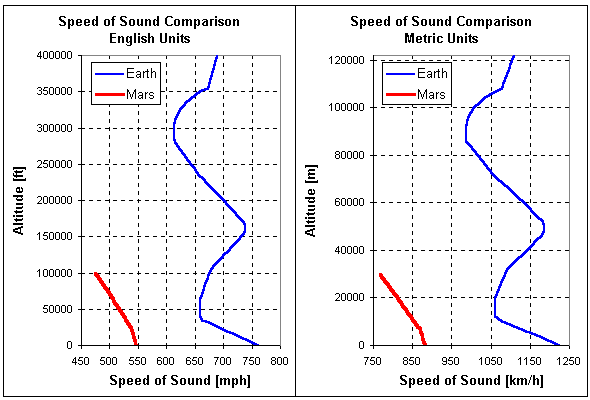
Takeoff from Mars back to fleet orbit would require an escape velocity Ve (km/s) of 5 compared to Earth’s Ve (km/s) of 11.2, so a thrusting rocket system would need 44.6% less than on Earth. The ship would need to take off vertically and then accelerate like an aircraft, pitch up to an angle of attack that would allow orbit but prevent stall and then accelerate to its escape velocity thrust. The speed of sound on Mars would also be a major factor to consider since it considerably different than Earth’s and would affect Mach speed, wing buffeting with stalls and spins. The radio transmissions to Earth would have need adjustment on the wave modulation.
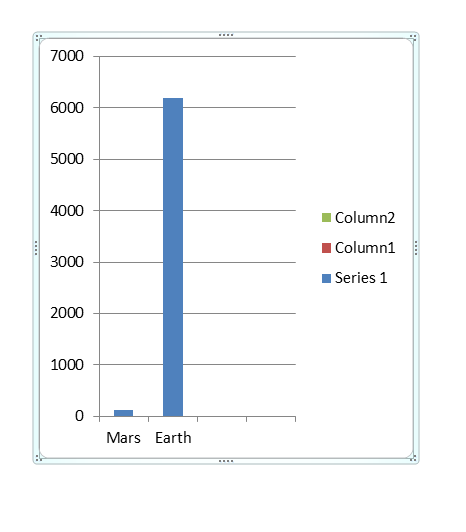
The fuel requirements to launch for the planet Mars would be based on the height of the Exosphere where the ship would encounter the least drag from atmospheric molecules. The comparison below compares Earth’s Exosphere at 6,200 miles and that of Mars at 120 miles, so the fuel would be some 51.5 x less than that required on Earth for the same ship’s escape velocity.
GRAVITY |
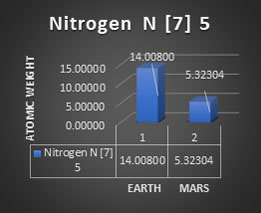
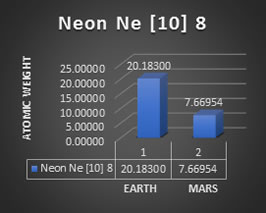
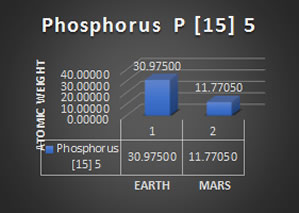
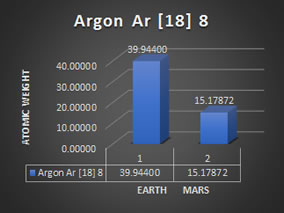
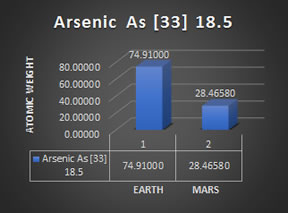
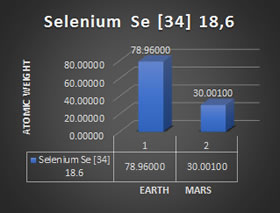
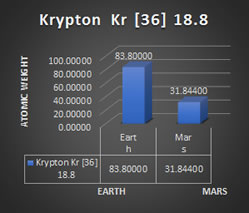
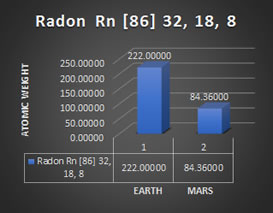
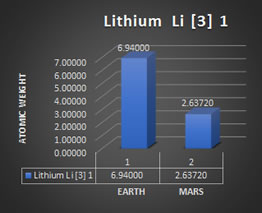
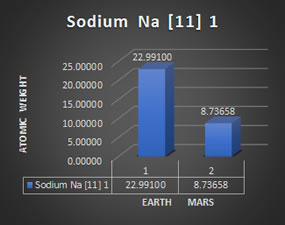
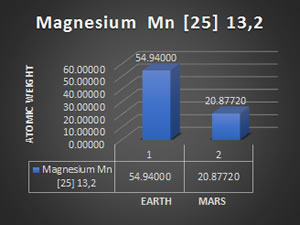
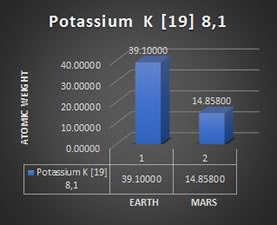
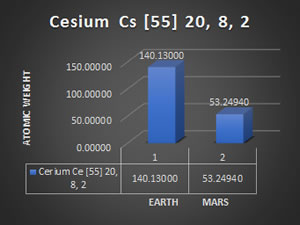
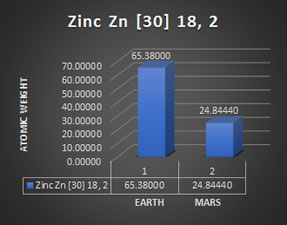
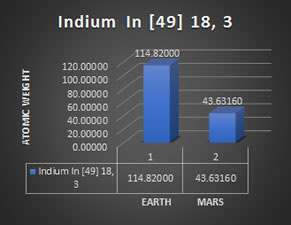
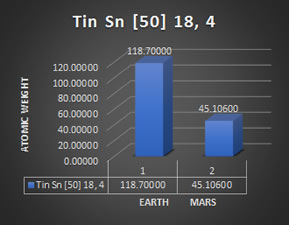
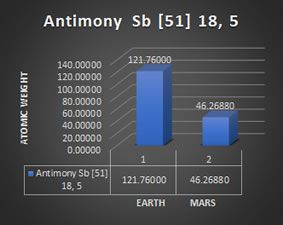
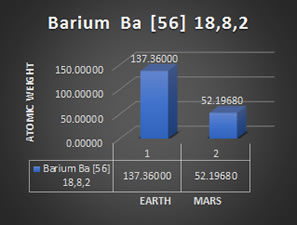
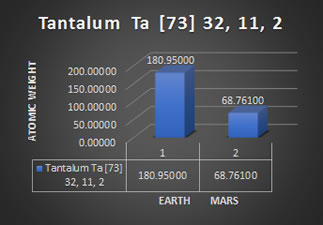
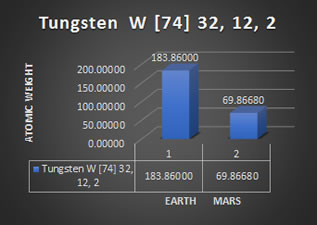
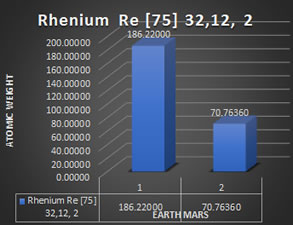
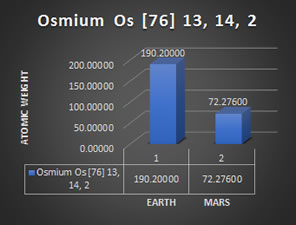
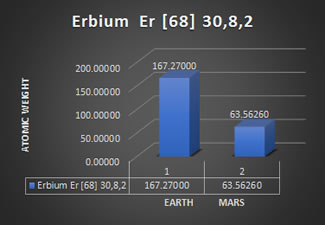
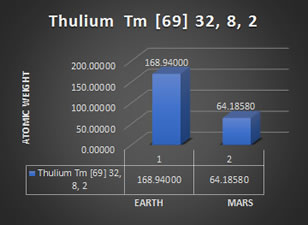
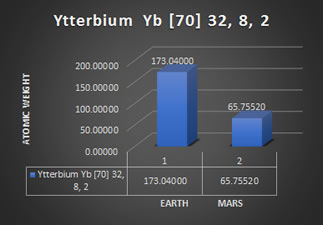
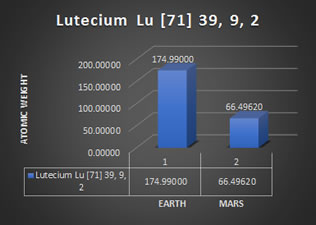
Manufacturing on Mars for the construction of dwellings and storage will require a knowledge of the chemistry, materials and elements. |

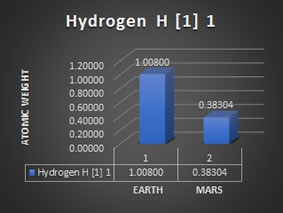
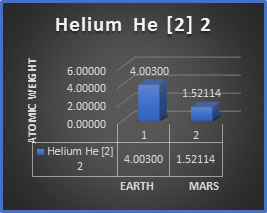
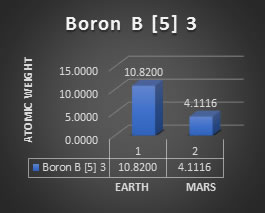
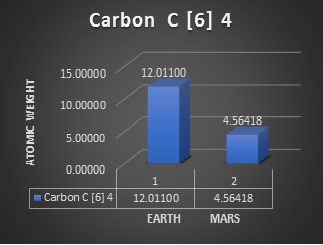




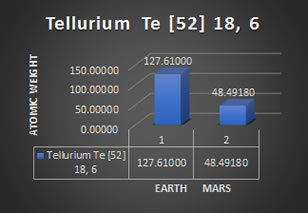
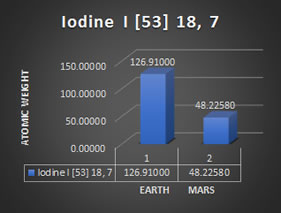
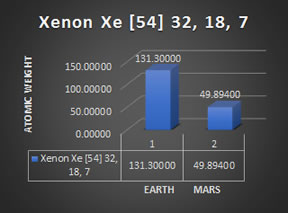
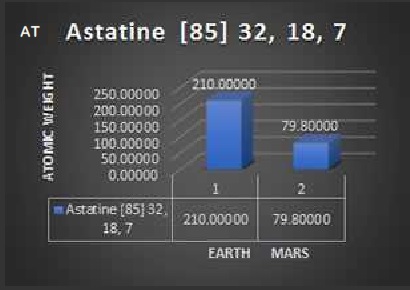


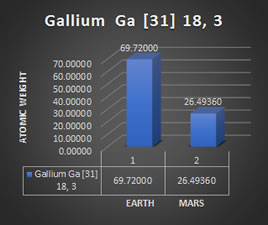
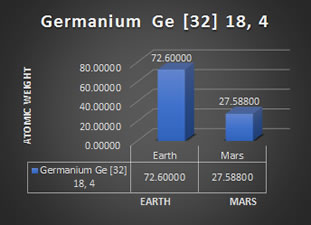

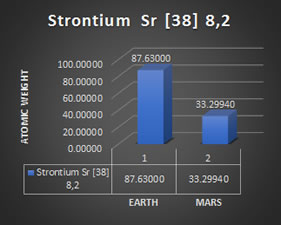
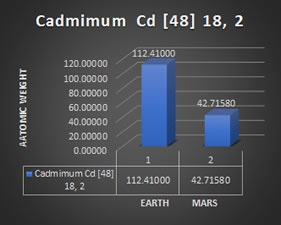
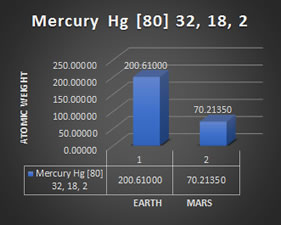
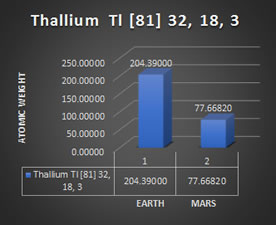
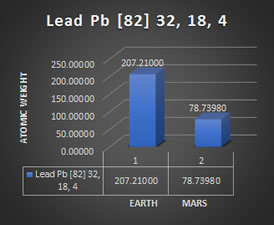


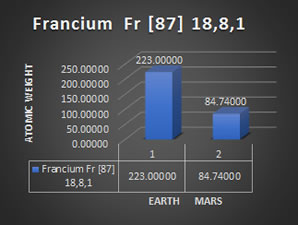

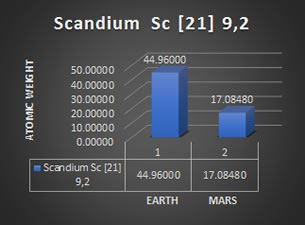

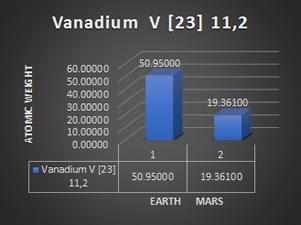
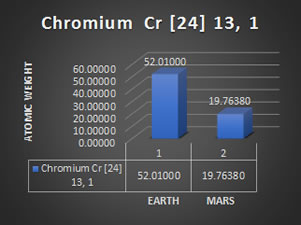

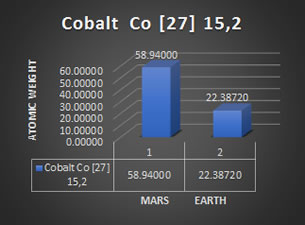
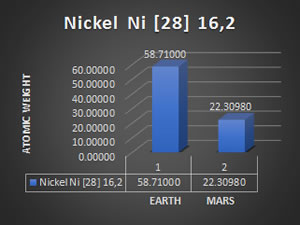
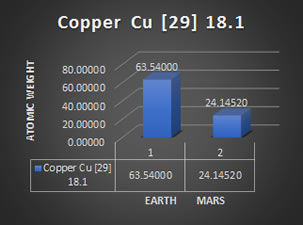

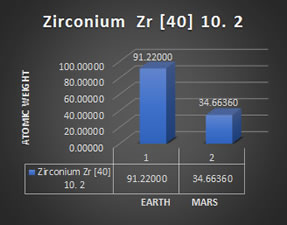
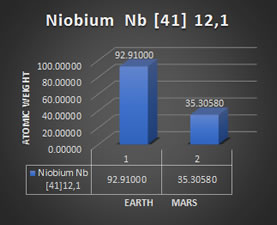
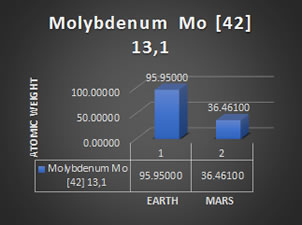
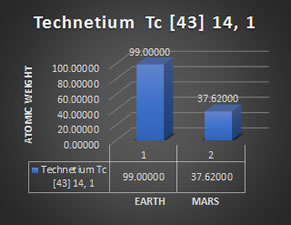
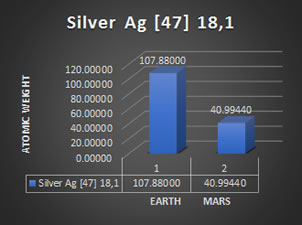
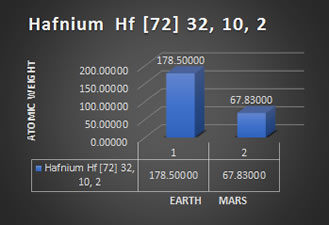
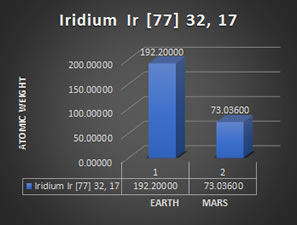
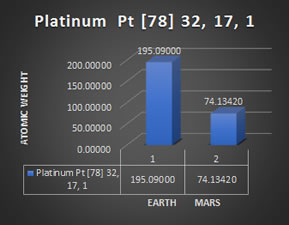
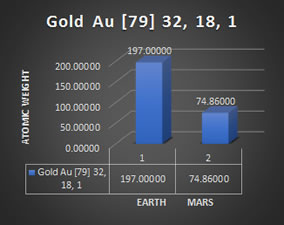
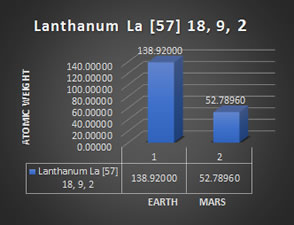

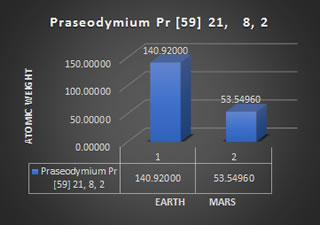
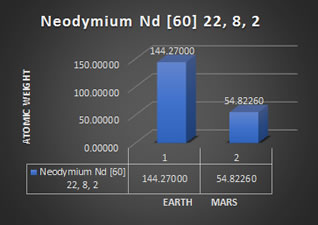
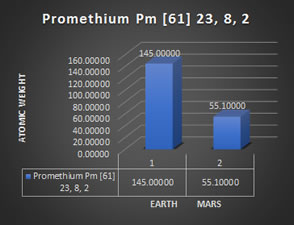
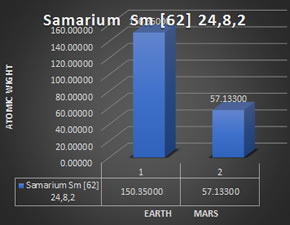
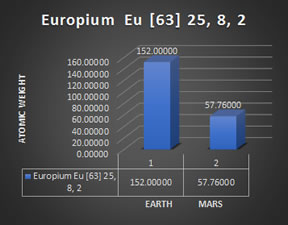
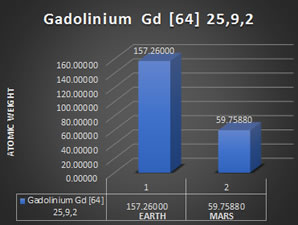

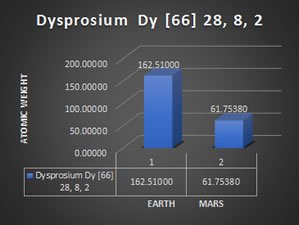
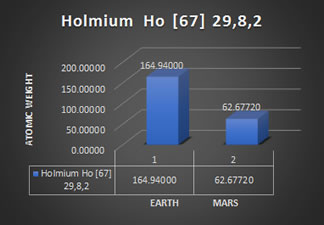
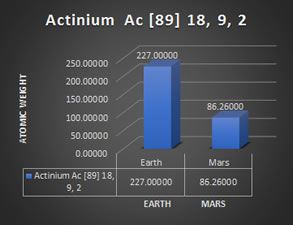

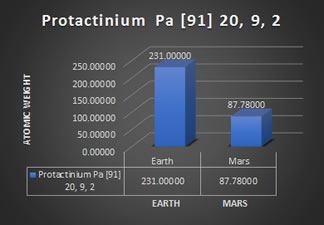

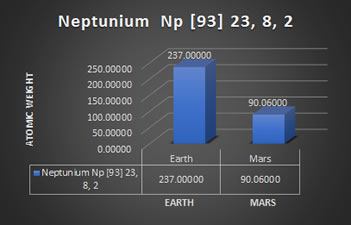
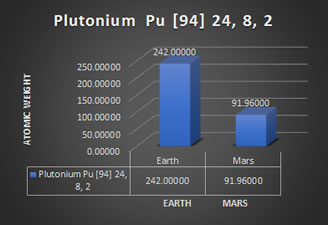
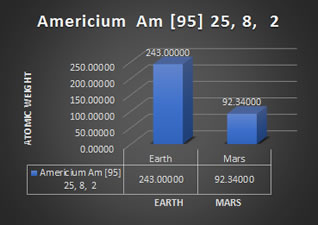

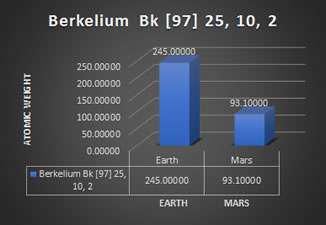

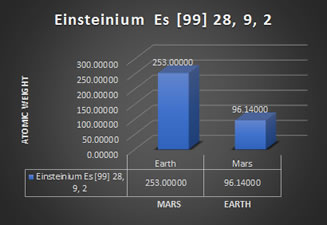
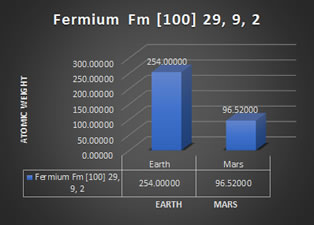
| SURVIVAL ON MARS |
|---|
|
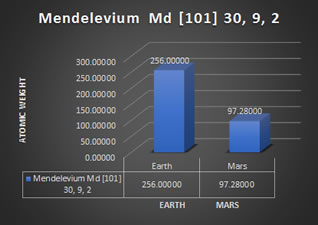
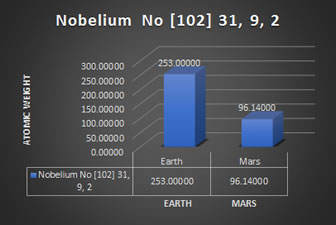
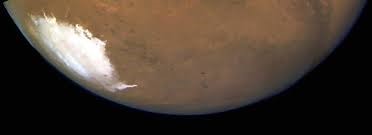
Long term colony requirements could supply electricity with solar cells and wind, even though wind is not developed with the same high and low pressure of the Earth the planet still has Coriolis wind factors and occasional sand storms which would hamper the solar panels ability to collect electricity for the oxygen generators and lighting. Back up battery collectors for several days of sandstorm would be vital to survival. Location of large concentration of water and its purification from Martian microbial would be a major goal for long term colonization. The initial crew would need 500 days of water for a crew of 3 astronauts at 3 gallons a day each, that would be 4,500 gallons x 8.34 = 37,530 pounds on Earth and 14,261.40 pounds on Mars plus the weight of any bladder tanks. Water on Mars may have been more prevalent during its volcanic periods which heated up the atmosphere. The average temperature on Earth is 57 degrees F. and on Mars -81 degrees F. freezing any liquid, but there are indications that water flowed in the Martian past. Extraction of water from its polar region and locating water near its volcanoes in sub terrain pools may provide a source for future colonization.
One interesting observation Mars has very few meteorite impacts compared to our Moon; the planet is much closer to a large asteroid field than our moon. This may be that the heavy dust storms of the planet have been covering up these events. It may be also that Jupiter’s gravity is a shield to these events.
Moving around the Martian surface could be accomplished with the newer rover designs which could be retrofitted with GPS equipment bringing in a new era of navigation in space. Martian GPS satellites would send their signals to modified dish antennae aboard their rovers. Due to Coriolis wind factors occasional sandstorms could last several weeks and the solar panels would not generate electricity for the oxygen generators and other options would be needed to counter the effects of sandstorms which would be vital to survival long term colonization. The initial crew would need 500 days of water for a crew of 3 astronauts at 3 gallons a day each, that would be 4,500 gallons x 8.34 = 37,530 pounds on Earth and 14,261.40 pounds on Mars plus the weight of any bladder tanks.
SURFACE NAVIGATION & TRANSPORTATION
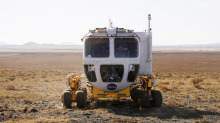
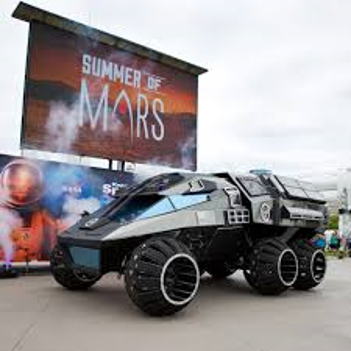
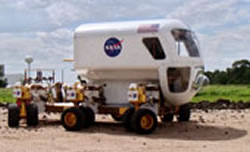
Below are some of the surface vehicles designed and tested for the trip they are designed to deploy the space suits for the Martian surface without decompressing the vehicles. They have suspensions that can take large variance in the terrain slopping.
HUMAN BIOLOGY GRAVITY & ATMOSPHERE Biology of humans after long term exposer to Martian gravity may change with muscle and bone degradation. Females may have menstruation issues and fertilization may require centrifugal equipment or IVF. Infants may walk earlier, and teething may take place later. Spinal elongation may occur after several generations. The first Mars baby born weighing 9 pounds on Earth would weigh in at 3.42 pounds on Mars thus would have less issues standing provided his muscles would be able to exercise to Earth’s standard. Space suits on Mars would require additional protection from tearing from rocks during exploration, materials like Kevlar could be woven into the outer layer of the suit. The pressure on Mars’s surface is a real issue since it is above the Armstrong pressure line were body temperature would cause boiling of liquids. Water on Earth boils at 212 degrees F. at sea level on the surface of Mars it would boil at body temperature without a Space Suit. The effects of hypoxia and hypothermia would be instantaneous without a space suit.
II. Servicing Concept with GPS Constellation Systems The deployment of the GPS satellites around Mars would be accomplished during first sets of orbits around the Mars while the Astronauts are preparing for the deployment of the spaceship landers. Mars like the moon around Earth has no magnetic pole. So, if the multiple land missions are going to encompass 500 square miles of Mars exploration, then a cone of reception would cover this area with 4-5 satellites. The GPS would be primary form of navigation with the secondary being dead reckoning by celestial navigation and pilotage.
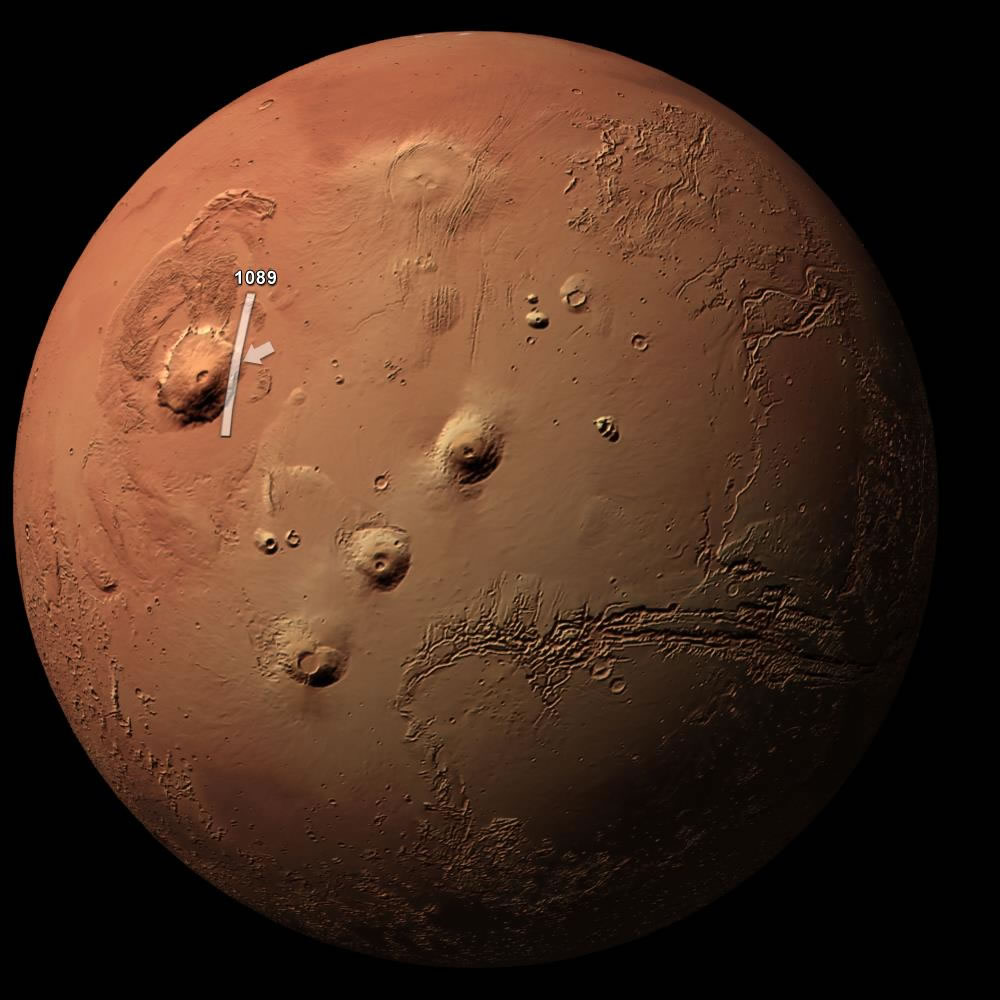
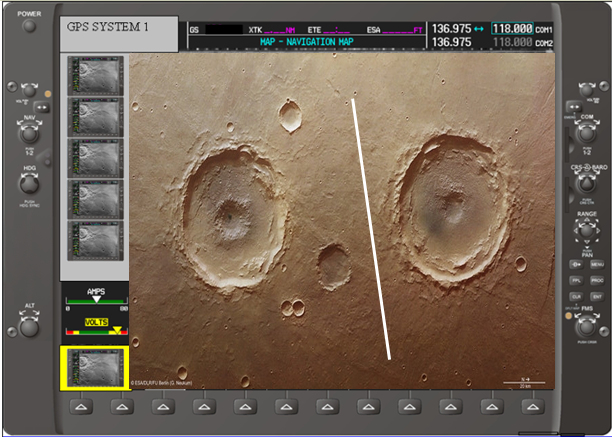
III. Goals Pertinent to the Advancement of Science Below is a display of a potential futuristic Garmin M.F.D. programmed for a Mars Mission with data being transmitted from its orbiting GPS Satellites. This data will include man made electronic intersections to provide direction and location. The goals of a navigation system for exploration would benefit the Astronauts and future missions into space. Here the satellites have detected an over-voltage in the GPS System 1 telling the Astronauts to change over to one of 4 backup systems. Note in near center of Mars map and the example of the first Mars route in white.
Example Moving Map Display of Mars
IV. Identification of Priority Earth side:
I. Earth side testing of concept with present Martian data in simulators. Identification of Priority Mars side: I. Deploy satellites around the planet. V. Development of New Technologies and Project Heritage
Since man has not used GPS on other planets or asteroids, experimentation of this kind of navigation on the moon and Mars would be essential to using GPS in other areas of the solar system. The challenge to improve navigation would bring on safety in exploration. Had Magellan, Columbus, Erickson, or Lewis and Clark been provided with this new marvel of electronics, the world would have been a lot easier to navigate. Not to explore is not human and it’s what drives the spirit to new heights. The heritage of this type of navigation is new in that it deals with a slow rotating sphere and would require a new approach to satellite deployment and usage. The concept of stationary satellites is not new and orbital formulas are used every day over the Earth.
Terra Forming the Mars’s atmosphere to an 21 % oxygen level will require that man develop a nuclear-powered magnetosphere otherwise the oxygen build up will be depleted by the solar winds and gravitation pulls of Jupiter. Mars does not have magnetic poles. Oxygen generators would be used over several centuries to change the atmosphere, plants would be used to change carbon dioxide to oxygen in the green house that man will need to build. Plants could not survive outside of these structures because of the cold and dust storms. Building a man-made ionosphere would protect the planet from the ultraviolet and cosmic radiation.
VI. Risk Mitigation of Use with the Constellation System
Like any new technology research, development and experimentation are costly and would require substantial investment. System simulator testing could reduce risks associated with mathematics and wavelengths. Incorporation into the Constellation system and development and the mission to Mars create new data base would be very costly but it would give humans knowledge to go to other worlds and provide first electronic highway in space with Lunar and Mars GPS systems. On Earth all roads lead to Rome on the moon and Mars all roads lead to eternity.
VII. Data Storage and References
Data storage could be shared or sold to private industry and could be classified as governmental or private if non- governmental enterprises consider this mission. There are numerous scientific servers that can store the data here on Earth or in the future on the Mars and in orbit around it. testing could reduce risks associated with incorporation into the Constellation system and development and the mission to Mars create a new data base would be very costly but it would give the human race knowledge to go to other worlds and provide first hand experience to a different reality.
VIII. Propulsion Systems to Mars
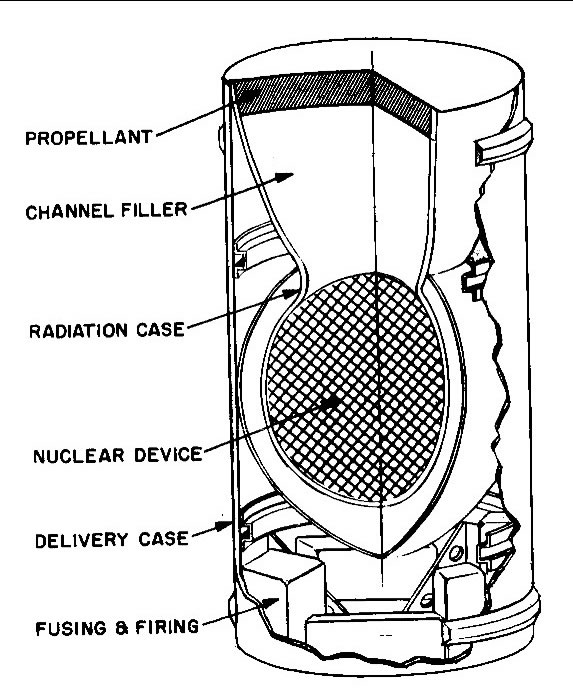
One system of propulsion nuclear would require a trajectory from the orbit of the Moon toward Mars rather then a launch from Earth since there are Treaties in place for radiation contamination of the atmosphere. The rocket Project Orion was the first serious attempt to design a nuclear pulse rocket. The design effort was carried out at General Atomics in the late 1950s and early 1960s. The idea of Orion was to react small directional nuclear explosives utilizing a variant of the Teller-Ulam two-stage bomb design against a large steel pusher plate attached to the spacecraft with shock absorbers. Efficient directional explosives maximized the momentum transfer, leading to specific impulses in the range of 6,000 seconds, or about thirteen times that of the Space Shuttle main engine. With refinements a theoretical maximum of 100,000 seconds (1 MN·s/kg) might be possible. Thrusts were in the millions of tons, allowing spacecraft larger than 8×10⁶ tons to be built with 1958 materials.[3]
This low-tech single-stage reference design would reach Mars and back in four weeks from the Earth’s surface (compared to 12 months for NASA’s current chemically powered reference mission). The same craft could visit Saturn’s moons in a seven-month mission (compared to chemically powered missions of about nine years). One problem that needs to be worked out is that the rocket’s velocity would exceed the effects of the Martian gravity and overshoot the orbit so the rocket would need to slow down based on Newton’s laws of acceleration and motion. The spaceship would need to complete a 180 degree turn around in order to slow down and at those high velocities would change the trajectory to the red planet. To avoid this a frontal chemical rocket would have to be included to slow the vehicle down for orbital entry.
Using small nuclear explosions on the rocket will have a cause and effect sending small shock waves through the surrounding space such as when a rock is thrown into a pond with many ripples which may dislodge asteroids and meteorites from their orbits around the Sun. A secondary type of rocket orbiting the moon could also be held in reserve for the intercept of an asteroid arching towards Earth on a collision course for a multi purpose roll. These types would not be manned and would have a fusion bomb to disrupt the trajectory of the asteroid.
The rocket Project Orion was the first serious attempt to design a nuclear pulse rocket. Design below of a basic venturi NR.
IX. TERRAFORMING MARS
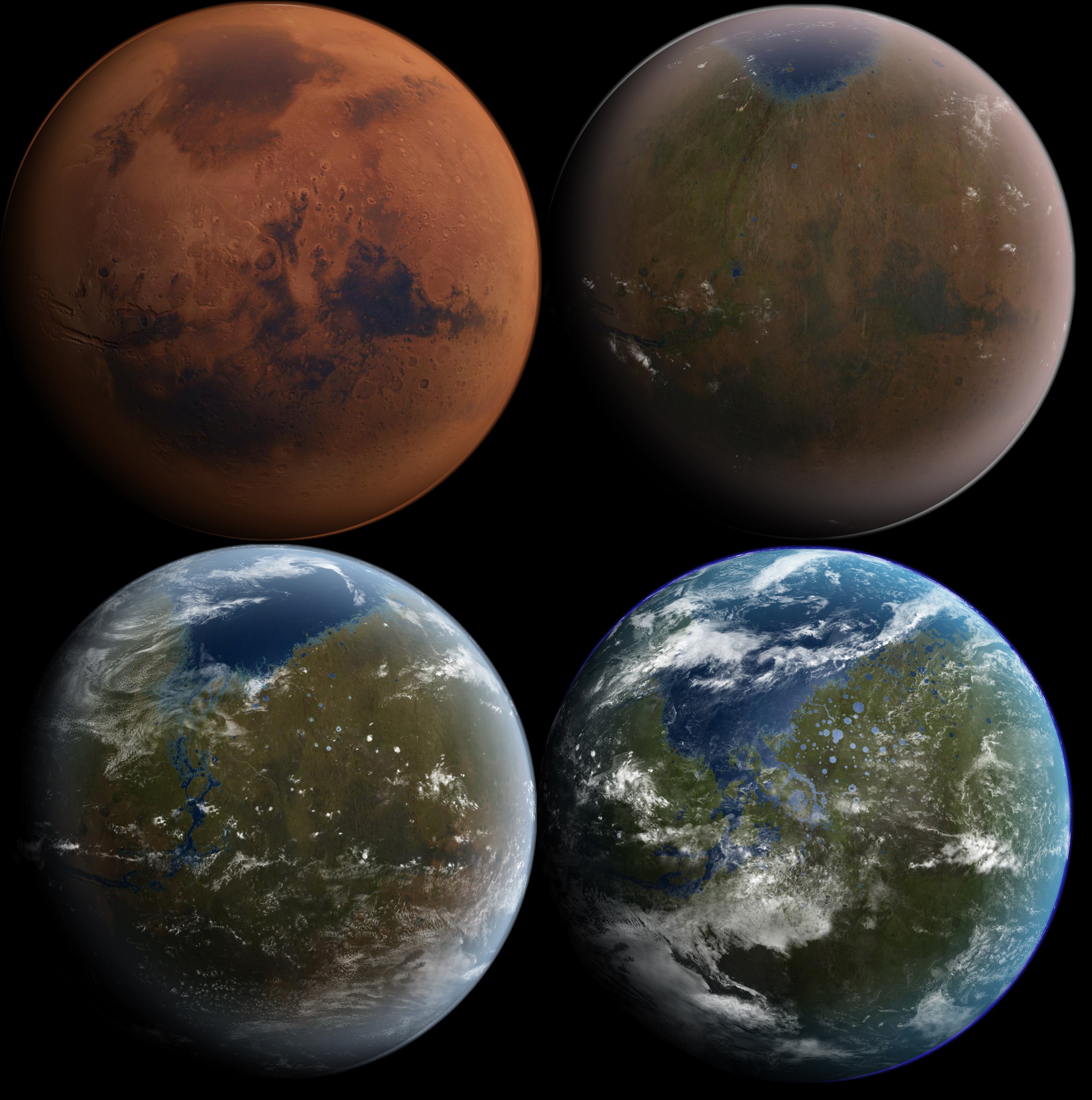
Terrformation of Mars would take place over several century’s of time and would be a process of planetary engineering, with the goal of transforming the planet from one hostile to one that would allow terrestrial life to one that can sustainably host humans and other lifeforms free of protection or mediation. The process would presumably involve the rehabilitation of the planet’s extant climate, atmosphere, and surface through a variety of resource-intensive initiatives, and the installation of a novel ecological system or systems. The process could include the relocation and process of water works, a breathable oxygen rich atmosphere, a nuclear-powered magnetosphere at the poles and an atmospheric layer of ions to protect the planet from ultraviolet radiation.
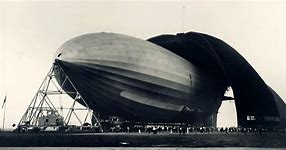
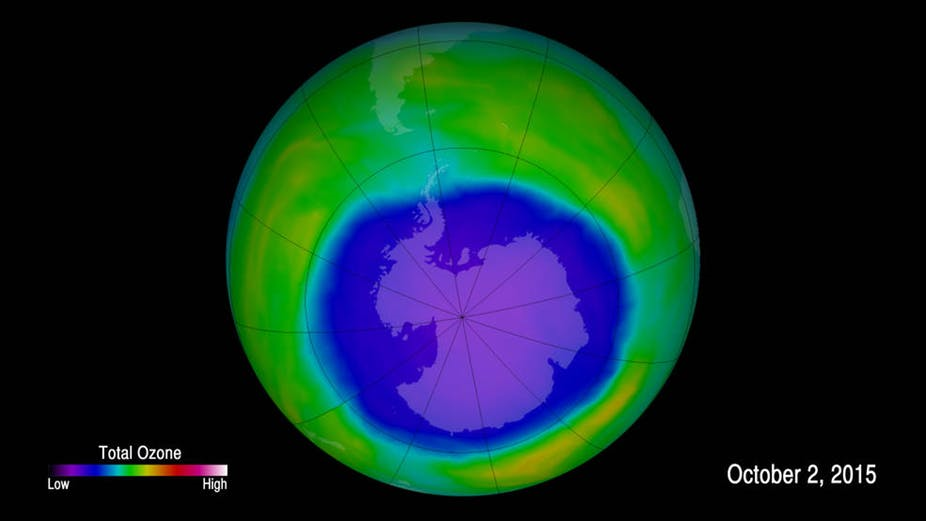
One way that the ozone layer could be built on Mars would be with large dirigibles using O3 generators attached. The O3 generators would be built into a gondola on the bottom of the dirigible. On Earth these experiments could start with the repair of our damaged ozone layer caused by industry, meteorites, and volcanoes. The governments would have to determine how many tons of O3 would need to be replaced in the lower stratosphere to restore the Ozone layer to its original state. This could use data imagery from satellites to determine the size of the hole. Since the ozone layer on Earth starts at around 80,000 feet higher altitude equipment would be required. If this works on Earth, then this method could be used on Mars. Of course, the area to be covered on Mars would have to engulf the whole planet and would take centuries to complete. Helium gases could be used to lift the platforms with the ozonizer equipment.
The generators would be powered by solar panels and launched by the poles from New Zealand, Australia and Thule, Greenland during the summer periods where there are periods of 24 hours of sunlight. Although some of the damaged area of ozone has returned it is still not at the levels it was once due to refrigerants CFC, hair spray, NO, N2O, Br, CL and other pollutants. Some authorities mention damage at the Ozone layer may cause melting ice caps, rising oceanic levels, disappearing atolls, damaged coral reefs, Australian bush fires, warmer ocean temperatures causing increase in hurricane and cyclone events, mutation of viruses and skin cancer.
Unit Price: $19.95
Detailed Description Unit Price: $14.95
|


.jpg)